

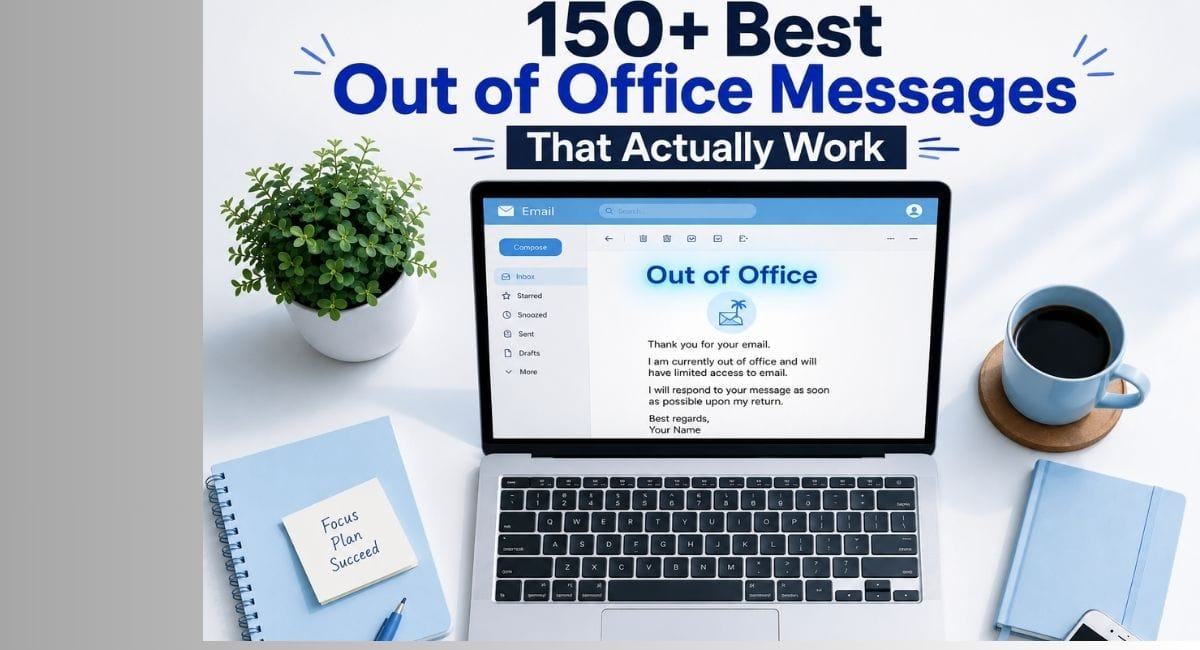
You finally did it. You blocked the calendar, booked the flight, and told your boss you’re taking time off.
But before you close that laptop for the last time this week, there’s one tiny thing left to do — and most people rush through it, get it wrong, or forget it entirely.
Your out of office message.
It sounds like a small detail. It’s not. That one short paragraph is the difference between a peaceful, guilt-free break and an inbox full of follow-up emails from people who thought you were ignoring them.
A great out of office message tells people you’re away, sets a clear expectation, and points them in the right direction — all in under 150 words. A bad one (or no message at all) leaves senders confused, annoyed, and wondering if something went wrong.
Whether you’re heading out on vacation, taking a medical leave, celebrating a holiday, or traveling for business, this guide has everything you need. You’ll find over 150 out of office message examples written for real situations — professional, funny, short, formal, and everything in between. Read through, find one that fits, and go enjoy your time off.
You’ve earned it.
What Is an Out of Office Message?
An out of office message — also called an OOO message, auto reply, email autoresponder, or vacation responder — is an automatic email notification that goes out to anyone who emails you while you’re unavailable. It confirms that their message was received and lets them know when they can expect a response.
It’s a simple concept, but it carries a lot of professional weight.
When someone emails you and hears nothing back, they don’t know if their message got lost, if you’re busy, or if you’re simply choosing not to respond. That silence creates uncertainty. An out of office reply eliminates that uncertainty immediately.
Beyond courtesy, a well-written out of office email does several important things:
It manages expectations so people aren’t left waiting without context. It protects your professional reputation during extended absences. It provides a clear path for anyone who needs urgent help. It signals healthy workplace boundaries — you’re away, and that’s completely okay. And perhaps most importantly, it gives you permission to truly disconnect without the nagging feeling that you’re dropping the ball.
The best out of office messages are short, clear, warm, and complete. They don’t overshare. They don’t underpromise. And they make the sender feel taken care of even in your absence.
The 5 Things Every Out of Office Message Must Include
Before you look at examples, understand what separates a good out of office message from a forgettable one. The most effective auto replies share five core elements.
First, an acknowledgment — something that confirms you received their email and appreciate them reaching out. Second, a notice of absence — clear communication that you’re away and not actively monitoring your inbox. Third, your return date — and this should always be specific. “I’ll be back Monday, August 5” is infinitely more useful than “I’ll be back soon.” Fourth, an alternative contact — a colleague’s name and email for anyone who needs help before you return. And fifth, a warm, professional close — the tone you end on matters.
Optional but valuable additions include your phone number for urgent calls, a link to a helpful FAQ or resource page, the nature of your absence if you’re comfortable sharing, and your job title and company name for external recipients who may not know you well.
With those five elements in place, your out of office reply is complete. Everything else is personality.
Professional Out of Office Messages for Any Workplace
These examples work in corporate environments, client-facing roles, and any professional setting where tone and clarity matter above all else.
Thank you for your email. I am currently out of the office and will return on [Date]. I will respond to your message as soon as possible upon my return. For urgent matters, please contact [Colleague Name] at [email@company.com]. Best regards, [Your Name]
Thank you for reaching out. I am away from the office from [Start Date] through [End Date] with limited access to email. I’ll do my best to respond within 24–48 hours of my return. If your matter is time-sensitive, please reach out to [Colleague Name] at [email] or [phone number]. Warm regards, [Your Name]
Hi there, I’m currently out of the office until [Return Date]. During this time, I won’t be checking email regularly. If your question is about [topic], you may find answers at [link to resource]. For immediate assistance, contact [Colleague Name] at [email]. I’ll follow up with you as soon as I’m back. Thank you for your patience, [Your Name]
This is an automated response to confirm receipt of your email. I am currently out of the office from [Date] to [Date]. For urgent matters requiring immediate attention, please contact [Department/Colleague] at [contact information]. I will respond to your email upon my return. Regards, [Your Name] | [Job Title] | [Company]
I’m out of the office until [Date]. I’ll reply when I return. For urgent needs: [Colleague] at [email].
These examples work because they’re clean, complete, and respectful of the sender’s time. No fluff. No oversharing. Just the information that matters.
Out of Office Messages for Vacation
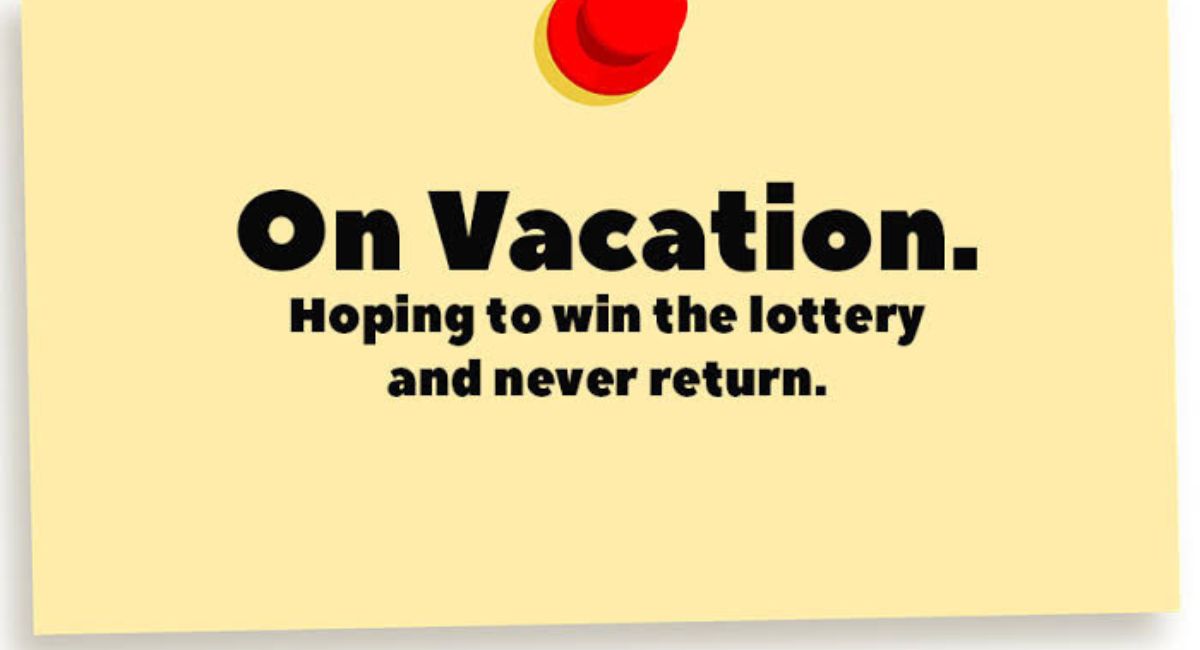
Vacation is the most common reason people set an out of office auto reply — and the one where most people feel the most pressure to get the tone right. You want to sound like you’re genuinely taking time off, not like you’re apologizing for it.
Hi! I’m currently on vacation and will be back in the office on [Date]. I will have limited access to email during this time. If you need immediate assistance, please contact [Colleague] at [email]. I look forward to connecting with you when I return! Best, [Your Name]
Thank you for your message! I’m currently away on a well-deserved vacation and won’t be checking email until [Return Date]. I’ll get back to you as soon as I’m back and recharged. If it’s urgent in the meantime, [Colleague Name] at [email] is your best point of contact. Cheers, [Your Name]
I’m currently traveling internationally and will be out of the office from [Date] to [Date]. Due to time zone differences and limited connectivity, my response time may be delayed. For urgent matters, please contact [Colleague] at [email]. Otherwise, I will reply to your message upon my return. Thank you for your understanding, [Your Name]
I’m spending some quality time with my family and will be out of the office until [Date]. I’ll be checking email occasionally but may not respond immediately. For urgent matters, please reach [Colleague Name] at [email]. Talk soon, [Your Name]
Quick note: I’m out of the office from [Date] through [Date] for a short getaway. I’ll be back and responding to emails on [Return Date]. For anything urgent: [Colleague] at [email].
One thing to notice across all these vacation auto replies: they don’t apologize. You don’t owe anyone an apology for taking time off. A warm, clear message is more than enough.
Funny Out of Office Messages That Still Get the Job Done
Not every workplace calls for a buttoned-up auto reply. If you work in a creative environment, have a close relationship with your contacts, or simply want to inject some personality into your absence notice, a funny out of office message can be a small but memorable touch.
The key is balance — make it fun, but still include the essentials.
I’m currently out of the office doing very important things — like remembering what sunlight feels like. I’ll be back on [Date] and will reply then. If it’s urgent: [Colleague] at [email].
Out of office alert! I’ve temporarily traded my keyboard for a beach towel. Back on [Date]. Please leave a message after the seagull. Urgent? [Colleague Name] at [email] has you covered.
I’m away until [Date], recharging my human batteries. I promise to respond to your email with my full energy and enthusiasm when I return. For urgent matters: [Colleague], [email].
My out of office is on. That means I’m either on vacation, at a conference, or hiding somewhere with a good book and no Wi-Fi. Back on [Date]! Emergency contact: [Colleague] at [email].
You’ve reached my email, but I’ve escaped. Don’t worry — I’ll be back on [Date], fully recovered from the wild. For urgent matters, [Colleague] at [email] is on duty.
I’m out of office until [Date], living my best life. (Results may vary.) Your email is safe with me and I’ll respond the moment I’m back. Need someone now? [Colleague] at [email].
Gone fishing. Not literally — or maybe literally. Either way, I’ll be back on [Date]. Urgent: [Colleague] at [email].
A funny out of office message works best when it fits your voice and your audience. If you’re in legal, finance, healthcare, or any industry where tone is everything, skip the humor and go formal. But if your inbox is full of people who know you and appreciate your personality, a little wit goes a long way.
Short Out of Office Messages When You Need to Keep It Simple
Sometimes the best message is the shortest one. If you’re only gone for a day or two, or if you simply prefer brevity, these short out of office examples do exactly what’s needed without any extra words.
I’m out of the office until [Date]. I’ll reply when I return. For urgent matters, contact [Colleague] at [email].
Currently away. Back on [Date]. Urgent? Email [Colleague] at [email].
Away until [Date] with limited email access. I’ll get back to you soon. For emergencies: [Colleague], [email].
Thank you for your email. I’m away until [Date] and will respond shortly after my return.
Out of office: [Date] – [Date]. Will reply on my return. Urgent: [Colleague] at [email].
I’m out. Back [Date]. Emergencies go to [Colleague] at [email]. Talk soon.
Short doesn’t mean sloppy. Every one of these examples still hits the essentials — absence notice, return date, and emergency contact. That’s all you need.
Out of Office Messages for Sick Leave
Writing an out of office message when you’re sick comes with a unique challenge: you want to be honest without oversharing, and you want to protect your privacy while still giving people enough information to plan around your absence.
You are not required to explain your medical situation. “I’m out due to illness” or “I’m on a brief medical leave” is completely professional and widely respected.
Thank you for your email. I’m currently out of the office due to illness and will respond as soon as I’m back, which I expect to be around [Date]. If your matter is urgent, please contact [Colleague Name] at [email]. Thank you for your understanding, [Your Name]
I am currently out of the office for a medical reason and will return on [Date] (estimated). I’ll respond to all emails upon my return. For urgent assistance: [Colleague] at [email].
Thank you for reaching out. I am on medical leave from [Date] through [Date]. During this time, I will not be available to respond to emails. For all inquiries, please contact [Colleague Name] at [email] or [phone number]. They are fully briefed and happy to assist. I appreciate your patience and understanding. [Your Name]
Hi, thank you for your email. I’m currently away on medical leave and focusing on my recovery. I expect to return around [Date]. For immediate help, please reach [Colleague] at [email].
These messages are short, professional, and keep personal health details appropriately private. The phrase “focusing on my recovery” is a warm, human touch that acknowledges the situation without explaining it.
Out of Office Messages for Maternity and Parental Leave
Parental leave deserves a special kind of out of office message — one that’s warm and celebratory without being unprofessional, and clear enough that your contacts know exactly who to reach during your absence.
Thank you for your email. I am currently on maternity leave from [Date] to [Date] and will not be checking email during this time. For assistance during my absence, please contact [Colleague Name] at [email], who will be covering my responsibilities. I look forward to reconnecting when I return. Warm regards, [Your Name]
Hi! I’m currently on parental leave and won’t be available from [Date] to [Date]. I am so excited about this new chapter and appreciate your understanding. Please reach out to [Colleague] at [email] for any urgent matters — they’re fully equipped to help. See you on the other side! [Your Name]
Thank you for contacting me. I am on extended parental leave through [Date]. During my absence, [Colleague Name] at [email] or [phone] is handling my portfolio and will be glad to assist. I’ll respond to messages when I return. Thank you for your patience!
Parental leave messages can afford to be a little warmer and more personal. You’re experiencing something significant, and it’s okay to let that show — just make sure the practical information is front and center.
Out of Office Messages for Business Travel
Business travel is different from vacation. You’re still working — just not in the office. Your out of office message for a work trip should acknowledge that you’re accessible to some degree, while managing expectations around response time.
I am currently traveling for business from [Date] to [Date] and have limited access to email. I will respond to your message within [timeframe] of my return. For urgent matters, please contact [Colleague] at [email].
I’m attending [Conference/Event Name] from [Date] to [Date] and will have limited email availability. I’ll catch up on messages when I’m back on [Date]. Urgent matters: [Colleague], [email].
Thank you for your email. I’m currently on a business trip and checking messages intermittently. I’ll do my best to respond, though delays are possible. Return date: [Date]. Urgent contact: [Colleague] at [email].
I’m traveling for work through [Date] with limited inbox access. I’ll respond to your email as quickly as I can, and no later than [Return Date]. For immediate needs, [Colleague] at [email] can help.
Out of Office Messages for Public Holidays
Public holiday out of office messages serve a slightly different purpose — they’re often sent on behalf of an entire team or company, not just an individual. The tone is typically warm, festive where appropriate, and clear about when business will resume.
Our office is closed in observance of [Holiday Name] and will reopen on [Date]. We will respond to your email when we return. Wishing you a wonderful holiday! [Your Name / Team Name]
Thank you for your message! Our office is closed for the holiday season from [Date] through [Date]. We’ll be back on [Date] ready to help. Wishing you a joyful holiday season and a wonderful New Year! Warm regards, [Your Name]
Our office is closed for Thanksgiving from [Date] to [Date]. We’ll be back on [Date]. Wishing you a warm and restful holiday filled with gratitude! [Team Name]
Our office is closed in honor of Memorial Day and will reopen on [Date]. We are grateful for the brave men and women who served our country. We’ll respond to your email when we return on [Date].
Our team is celebrating Independence Day! We’ll be out of the office on [Date] and back on [Date]. Happy 4th of July! We’ll respond to your message when we return.
We are out of the office for Labor Day and will return on [Date]. Thank you for your message — we’ll be in touch shortly after we’re back.
Holiday messages are a great opportunity to add a little warmth. A simple seasonal wish at the end of your OOO email humanizes the automated response and leaves a positive impression.
Out of Office Replies for Weekends and After Hours
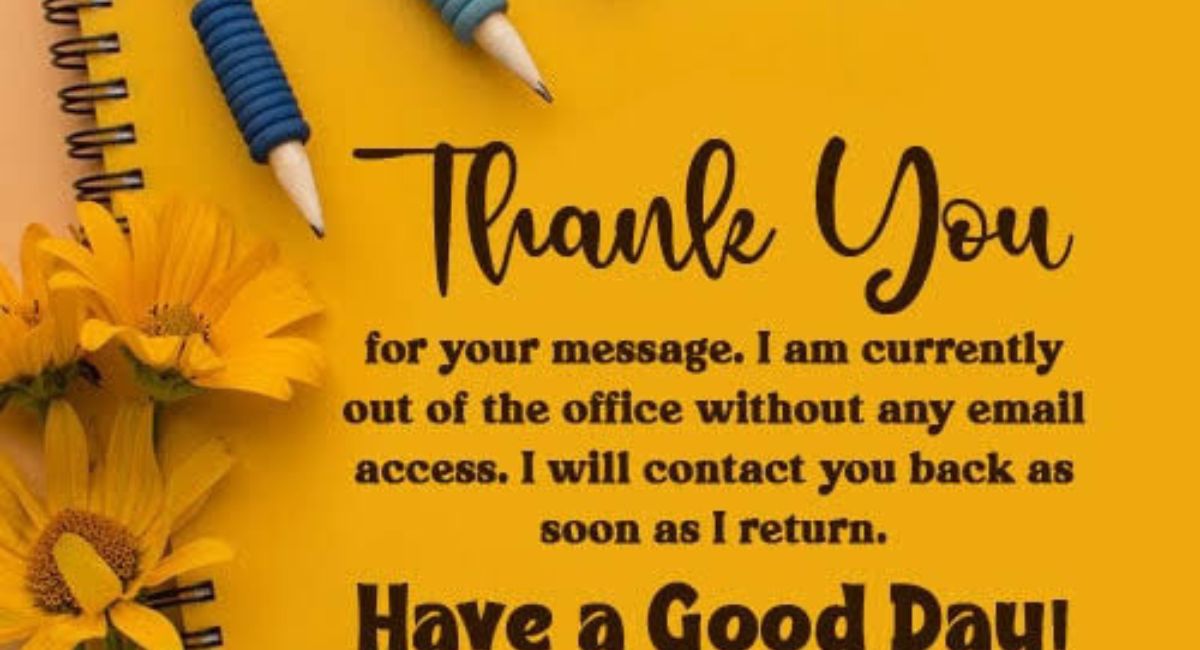
If you receive a high volume of emails from clients or customers who email at all hours, a weekend out of office message is a smart way to protect your personal time while still acknowledging the sender.
Thank you for your email! Our office hours are Monday through Friday, [time] to [time]. Your message has been received and will be answered on the next business day.
Hi! You’ve emailed outside of our business hours. I’ll be back in the office Monday morning and will respond to your message then. For urgent matters: [emergency contact].
Our team is currently off for the weekend. We’ll be back Monday, [Date] and will respond to all messages in the order they were received. Thank you for your patience!
You’ve reached us outside of business hours. Our team is available Monday through Friday, [hours], and will respond to your message first thing on [next business day].
Setting a weekend auto reply is one of the most underused tools in professional email communication. It signals clear boundaries without seeming dismissive, and it sets an expectation that helps both you and the sender.
How to Set an Out of Office Message in Gmail
Setting up a vacation responder in Gmail takes under two minutes.
Open Gmail and click the gear icon in the top right corner, then select “See All Settings.” Navigate to the “General” tab and scroll down until you see “Vacation Responder.” Click to turn it on.
Enter your start date and, if you know it, your end date. Add a subject line — something simple like “Out of Office” works perfectly. Then write your message in the body field. You can choose to only send the auto reply to people in your contacts list, which is useful if you want to avoid replying to newsletters and marketing emails.
Click “Save Changes” at the bottom of the page, and you’re done. Gmail will automatically deactivate the responder on your end date if you set one.
How to Set an Out of Office Message in Outlook
In Microsoft Outlook, go to the “File” tab in the top left corner and click “Automatic Replies (Out of Office).” Select “Send Automatic Replies” and check the box to set a date range — this lets Outlook activate and deactivate your message automatically.
One of Outlook’s most useful features is the ability to set separate messages for people inside your organization and people outside it. Your internal message can be more casual and brief. Your external message should be more formal and include full contact details.
Write your messages, click “OK,” and you’re set. Many enterprise Outlook environments also sync with your calendar to show your out of office status in meeting invitations and Teams presence indicators.
Out of Office Messages for Outlook and Gmail: Specific Examples
When writing for Outlook in a corporate setting, your external message should include your full name, job title, company, and at least one alternative contact method.
Thank you for contacting [Your Name] at [Company Name]. I am currently out of the office until [Date]. For immediate assistance, please contact [Colleague] at [email] or call [number]. I will reply to your message upon my return. Best regards, [Your Name] | [Title] | [Company] | [Phone]
For internal Outlook messages, shorter and more casual works well.
I’m out of the office from [Date] to [Date]. Please contact [Colleague] at extension [XXXX] for immediate assistance. Thanks! [Your Name]
For Gmail users who want something warm and natural:
Hey! Thanks for your email. I’m out of office until [Date] and not checking messages. I’ll get back to you as soon as I’m back. Need something urgent? Hit up [Colleague] at [email]. — [Your Name]
Out of Office Messages for Indefinite Leave
Sometimes you don’t have a firm return date — and that’s okay. Whether it’s an extended medical leave, a family emergency, or a career transition, you can still write a professional out of office message that handles the uncertainty with grace.
Thank you for your email. I am currently on an indefinite leave of absence and do not have a confirmed return date at this time. For all inquiries, please contact [Colleague Name] at [email] or [phone number]. They will be happy to assist you. I appreciate your understanding. [Your Name]
I am out of the office on leave and am unable to confirm a return date. Please direct all urgent matters to [Colleague Name] at [email]. Thank you for your patience.
Thank you for reaching out. I am temporarily away from work without a set return date. During this time, [Colleague Name] at [email] is your best contact for anything related to [your role/department]. I will respond to messages upon my return.
The key with indefinite leave messages is to give the sender a clear next step. Even without a return date, they should know exactly who to contact and how.
Industry-Specific Out of Office Message Examples
Different industries carry different expectations. Here’s how professionals across fields can tailor their out of office notifications to fit their context.
For healthcare professionals, patient safety always comes first. An out of office message in a medical context must always direct people to appropriate emergency resources.
I am currently out of the office from [Date] to [Date]. For medical emergencies, please call 911 or visit your nearest emergency room. For non-urgent inquiries, please contact [Colleague] at [email] or call [number].
For legal professionals, it’s important to avoid any language that could imply an attorney-client relationship is being established through the email exchange.
Thank you for contacting [Law Firm Name]. I am out of the office from [Date] through [Date]. Please note that this message does not establish an attorney-client relationship. For urgent legal matters, please contact [Colleague Attorney] at [email].
For teachers and educators, breaks are common and expected. Your out of office message can reference the school calendar directly.
Thank you for your message. I am out of the office during [School Break / Summer / Winter Break] and will return on [Date]. For urgent matters, please contact the school’s main office at [number].
For freelancers and independent consultants, your auto reply should reflect your personal brand and set clear boundaries around project timelines.
Hi! I’m taking a short break from [Date] to [Date] and will have limited email availability. I’ll get back to you by [Date]. For urgent project matters: [alternate contact or direct phone].
For customer service teams, the focus is volume and speed. Your auto reply should acknowledge wait times and point to self-service options where possible.
Thank you for contacting [Company Name] Support. Our team is currently away for [Holiday/Break] and will return on [Date]. We’ll respond to your inquiry then, in the order it was received. For urgent matters, visit our Help Center at [link].
Out of Office Message Do’s and Don’ts
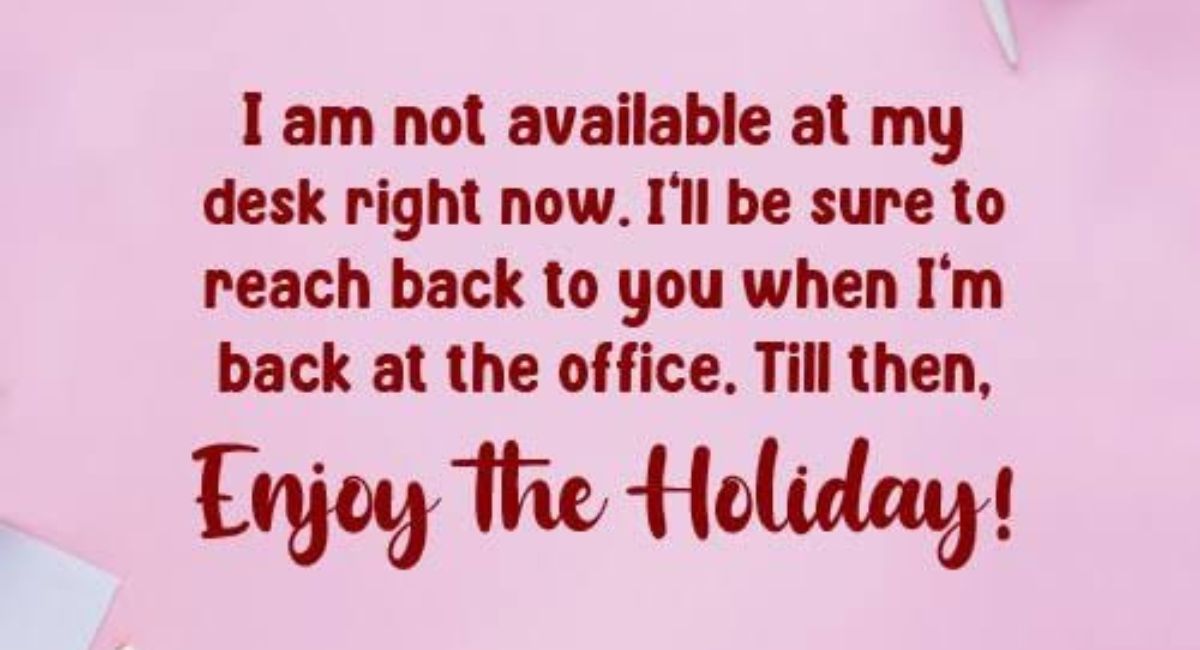
Even with examples in hand, a few common mistakes can undermine an otherwise solid out of office reply. Here’s what to keep in mind.
Always set your message before you leave — not the morning of your departure when you’re rushing out the door. Include a specific return date, not vague language like “soon” or “shortly.” Provide an actual alternative contact, not just a department email that nobody checks. Keep your external message formal even if your internal one is casual. And proofread everything — a typo in an auto reply is embarrassing because it goes out to every single person who emails you.
On the other side, don’t reveal too many personal details. “I’m traveling to [specific location] alone until Tuesday” is more information than anyone needs, and it’s a security risk. Don’t make promises you can’t realistically keep, like “I’ll respond the same day I return” when you know you’ll have 200 emails waiting. Don’t leave your out of office message running after you’re back — it erodes trust quickly. And don’t use humor in contexts where your audience or industry culture won’t appreciate it.
How to Write the Perfect Out of Office Message: A Simple Framework
If you want to write your own out of office message from scratch rather than using one of the examples above, follow this simple framework.
Start with a brief thank-you or acknowledgment. Something as simple as “Thank you for your email” or “Hi, thanks for reaching out” sets a warm tone immediately. Then state clearly that you’re out of the office and include your exact return date. Follow that with your emergency contact information — name, email, and phone number if relevant. Close with something warm but brief, and sign with your name.
That’s it. Five elements. Under 150 words. Complete.
The formula looks like this: [Acknowledgment] + [I’m away from X to Y] + [Return date] + [Emergency contact] + [Warm close]
Every example in this article follows that formula in one way or another. Once you internalize it, writing a great out of office message takes less than three minutes.
Frequently Asked Questions About Out of Office Messages
How long should an out of office message be? For most professional situations, 50 to 150 words is the sweet spot. It’s long enough to cover the essentials and short enough to be read at a glance. Customer-facing messages and holiday notices from companies can be slightly longer, but individual professional messages should stay concise.
Should I mention why I’m out of the office? It depends. For vacation, it’s perfectly fine to say so — it’s a normal, expected absence. For medical or personal leave, you have no obligation to explain. “Personal leave” or “a planned absence” is completely acceptable and widely understood.
Is it unprofessional not to have an out of office message? In most professional contexts, yes. The absence of an OOO reply leaves senders without any information about when (or whether) to expect a response. It can come across as disorganized or inconsiderate, even when that’s not your intent.
Should I respond to emails while on vacation? That’s entirely your call — but the purpose of an out of office message is to give you permission not to. If you set a clear expectation and provide an emergency contact, most senders will wait. Checking your email on vacation is a personal choice, not a professional obligation.
Can I use a funny out of office message at work? Yes, if your company culture and audience support it. Humor works well in creative, tech, and startup environments, and in messages to colleagues or contacts who know you well. Avoid it for external client-facing messages in formal industries like finance, law, or healthcare.
What’s the difference between an out of office message for internal vs. external senders? Internal messages (to colleagues and teammates) can be shorter, more casual, and skip the formalities. External messages (to clients, vendors, and new contacts) should be more formal, include your full name and title, and provide complete contact information.
When should I turn off my out of office reply? Turn it off the moment you return to work — ideally as your first action when you open your inbox. An active OOO message when you’re already back and responding creates confusion and looks careless.
What should I include in the subject line of my out of office email? Most email clients handle this automatically, generating something like “Out of Office: Re: [Original Subject].” You typically don’t need to set this manually — just focus on the body of your message.
Conclusion
Your out of office message is a small piece of communication with a surprisingly large impact. It shows people that you’re organized, thoughtful, and professional — even when you’re not available. It protects your time, sets expectations, and gives your contacts the information they need to move forward without you.
The best out of office messages are never an afterthought. They’re written with the same care and inte.
ntion as any other professional communication — clear, warm, complete, and true to your voice.
Whether you need something polished and formal for a corporate inbox, something warm and celebratory for parental leave, or something funny enough to make your contacts smile, the examples in this guide have you covered

A dedicated content writer with 5 years of experience, blending faith, words, and digital strategy to inspire peace.